You've probably Googled "leaving bedside nursing" at 3am after a 12-hour shift while your feet were still screaming. Maybe you felt guilty about it. Maybe you closed the tab before anyone could see.
That's where most nurses stay. Stuck between the pull to leave and the weight of everything that keeps them in place. The debt. The identity. The fear that there's nothing else for them.
This post is for you if you've been thinking about making the jump to corporate healthcare (Medical Device, Pharma, BioTech, Clinical Research) and getting out of the unit, but you're not sure if it's real or just a fantasy you entertain during the bad shifts.
I'm going to bust some myths. And I'm going to be straight with you, the way a colleague would, not the way a career coach selling a $2,000 program would.
Myth #1: "You'll miss patient care so much you'll regret it."
Maybe. Some nurses do.
But here's what the romanticized version of bedside leaves out: you're already not doing what drew you to nursing in the first place. You're charting. You're chasing MDs. You're managing six patients when you should have four. You're spending 40% of your shift on tasks that have nothing to do with the person in that bed.
The nurses who leave bedside and regret it usually left for the wrong reasons: running away from a bad hospital, or chasing money without thinking about fit. The ones who leave with intention, who transition into roles where they're teaching surgeons to use a device that saves lives or coordinating a clinical trial for a drug they believe in? They don't miss it the way you'd expect.
What they miss is the specific intimacy of that relationship. What they gain is the ability to impact thousands of patients at scale, without destroying their body doing it.
One clinical specialist I know who made the jump after 9 years of ICU put it this way:
"I still help people. I just don't have to eat lunch in a supply closet anymore."
Myth #2: "You'll take a huge pay cut to start."
This one requires some nuance, because it's partially true and completely misleading.
Yes, the base salary of a clinical specialist or associate territory manager is often in the $65,000–$80,000 range for the first role. That can feel like a cut if you're making $90,000 as a staff ICU nurse or $150,000 as a travel nurse.
Here's what the base salary doesn't include:
- Bonus/commission: Most Medical Device and corporate healthcare roles include OTE (on-target earnings) of 15–30% on top of base. A clinical specialist earning $75k base at 100% quota attainment might take home $90–$95k total.
- Car allowance or company car: $500–$800/month in vehicle compensation you weren't getting at the hospital.
- Expense accounts: Lunches, miles, conferences, scrubs. All covered.
- 401k matching: Most MedTech companies offer 4–6% matching, often better than hospitals.
- Equity/RSUs: At the right company stage, meaningful upside.
- No more $150 shoes every 6 months from standing on concrete.
The nurses who calculate total compensation, not just base salary, often find they're roughly equivalent or ahead within 18 months. And the ceiling on compensation growth in corporate healthcare is dramatically higher than in clinical nursing.
Myth #3: "You need a MBA or more certifications to be taken seriously."
No. Stop. This is the most damaging myth out there because it keeps qualified nurses frozen while they "get more credentials" they don't need.
Companies like Medtronic, Stryker, Boston Scientific, and Abbott are actively looking for nurses. Not because nurses are a backup option. Because a clinical specialist who can walk into an OR, scrub in, and speak a surgeon's language while demonstrating a device is worth more than any MBA grad they could hire.
Your CCRN, your ICU experience, your ability to manage a crashing patient. That's your credential. The corporate world doesn't need you to become someone else. They need you to translate who you already are into language they recognize.
That's actually the hardest part. Not school. Not networking. The translation.
Myth #4: "You need connections to break into this industry."
This one is partially true but mostly a story people tell themselves to stay comfortable.
Yes, referrals help. Yes, knowing someone speeds things up. But the reason people say "you can't get in without connections" is usually because they sent a nursing resume to a MedTech company and heard nothing. They concluded the door was closed. The door wasn't closed. The resume was wrong.
MedTech recruiters see nursing resumes every day that are full of clinical language that doesn't map to corporate value. "Cared for 6 ICU patients per shift" doesn't tell a hiring manager anything they can use. But "Managed high-acuity patient populations across cardiac and respiratory failure presentations, coordinating real-time interventions with cardiothoracic surgeons and intensivists under sustained pressure"? That starts to sound like someone who can handle a high-stakes sales territory.
The language gap is solvable. And when you solve it, the connections matter a lot less.
Myth #5: "If you leave, you're abandoning nursing."
This one lives in your chest more than your head, and it's worth addressing directly.
You didn't choose nursing because you wanted to work in a hospital. You chose it because you wanted to help people. If the institution that was supposed to enable that is destroying your health, your relationships, and your ability to actually show up for patients, staying isn't noble. It's unsustainable.
The nurses who make this jump don't stop being nurses. They're in hospitals every week. They're the ones making sure surgeons use devices correctly. They're the clinical voice in product development meetings. They're writing the training that keeps other nurses safer.
You can leave the unit without leaving the profession.
What Nobody Actually Tells You About the Jump
Here's the honest stuff that doesn't show up in the LinkedIn success stories:
The first 90 days feel weird. You've been in a role where your value is instantly visible: patient breathing better, vitals stabilizing, family reassured. In corporate, the feedback loop is longer. You might close your first deal at 60 days or 120 days, and the silence in between is disorienting for nurses who are used to immediate feedback.
You'll question yourself constantly in the beginning. Impostor syndrome is real and universal in this transition. Every nurse who made the jump has a version of the same story: "I sat in my first company meeting thinking everyone would figure out I didn't belong there." They figure out they were wrong. But it takes a few months.
You need to learn a new language fast. Not a foreign language. The language of your specific sector. MedTech has its own vocabulary, its own politics, its own rhythms. The nurses who thrive are the ones who study it the way they studied pharmacology: deliberately and with respect for the craft.
The lifestyle shift is real and it's mostly good. No more body clock destruction from rotating shifts. No more holidays at the hospital. No more eating standing up over a medication cart. The tradeoff is more travel if you're in a field-based role, but most nurses describe it as a different kind of tired. One that feels sustainable.
The Real Question You Need to Answer
Before you apply to anything, before you rewrite your resume, before you LinkedIn-stalk people in Medical Device and corporate healthcare roles, you need to answer one question:
What kind of corporate healthcare role actually fits YOUR background and personality?
Because "leaving bedside nursing" isn't one destination. Clinical Specialist, Medical Science Liaison, Account Manager, Clinical Educator, Clinical Research Coordinator, Health Tech Implementation. These are fundamentally different roles with different day-to-days, different compensation structures, and different success factors.
An ER nurse with high stress tolerance and competitive drive often thrives in sales-adjacent roles. A NICU nurse with deep patience and teaching instinct might be a perfect Clinical Educator. An ICU nurse with research instincts might be built for clinical trials coordination.
Going in without knowing which path fits you is how nurses end up in the wrong role, get burned out again, and conclude "corporate wasn't for me" when it was really just the wrong part of corporate.
What to Do Before You Apply Anywhere
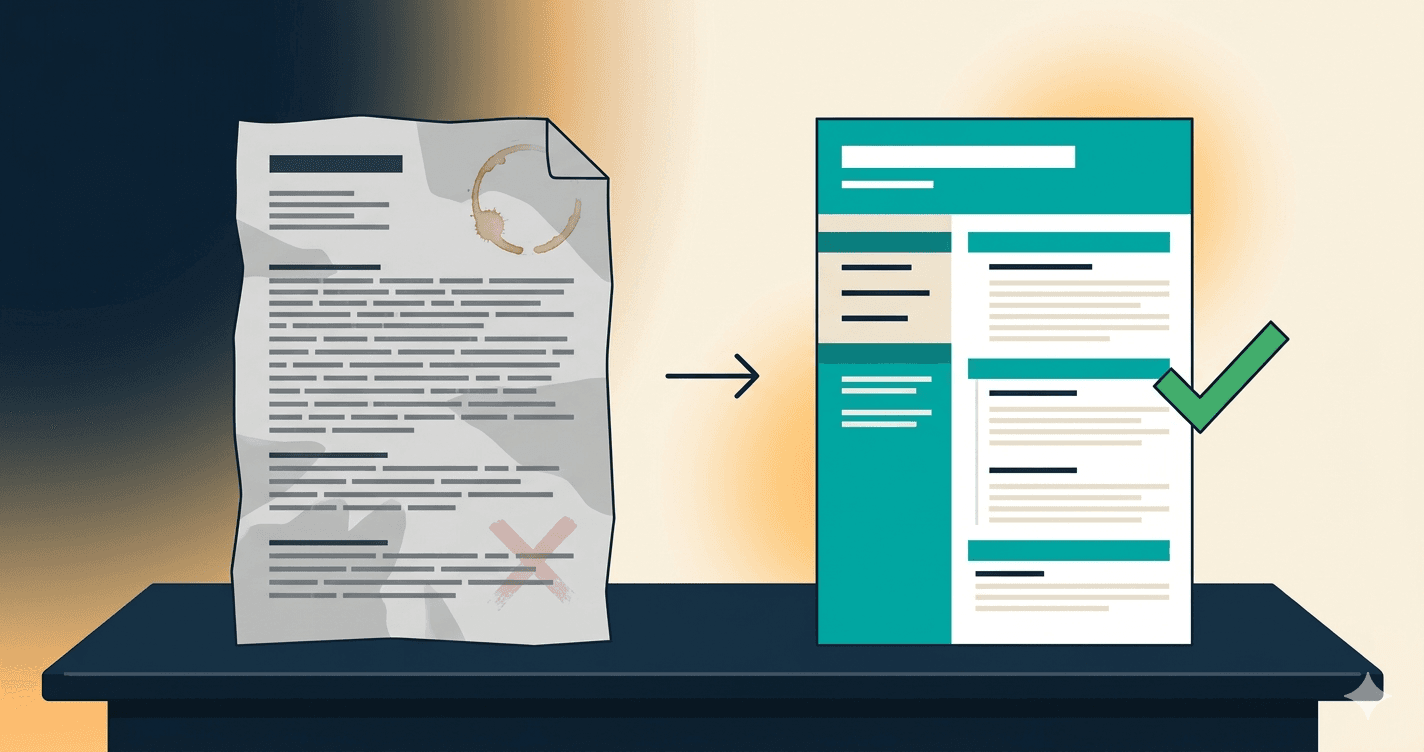
Figure out your role fit first, not which role sounds good, but which one actually maps to your clinical background and working style. Then rewrite your resume in corporate language. Not formatting tweaks: a full language translation from clinical duties to business outcomes.
We broke down exactly how to do that here: How to Rewrite Your Nursing Resume for Corporate Jobs →
Fix your LinkedIn. Corporate recruiters search for nurses by specialty and target role. If your headline still says "Registered Nurse | ICU | [Hospital Name]," you're invisible to them.
And learn the interview language before you need it. Your clinical stories are perfect answers to behavioral interview questions, they just need to be translated from "what happened in the hospital" to "what the corporate interviewer is actually hearing."
If you want a shortcut through steps 1–3, that's what NurseLeap is built for. The quiz takes your clinical background and tells you which roles fit you best. The Resume Transformer handles the translation, turning your experience into the language that gets callbacks.
Leaving bedside nursing is a decision only you can make. But you shouldn't have to figure out the transition alone.