And why that doesn't make you ungrateful, weak, or wrong.
TL;DR
- Experienced nurse burnout isn't a personal failure, it's a structural one.
- What's driving nurses out isn't burnout. It's moral injury. The distinction matters.
- The exit most nurses want isn't out of healthcare. It's out of the bedside.
- Knowing which corporate role fits your background is the step almost everyone skips.
You're not burned out because you're bad at nursing.
You're burned out because the system wasn't built for what you were built for. It was designed around throughput, liability, and margin. You were built around people.
Those two things are increasingly incompatible, and you've been absorbing the gap with your body, your sleep, and your sense of self.
This isn't a pep talk. It's not going to tell you to find a better unit or practice more gratitude. Here's what the data actually says about why experienced nurses are leaving bedside in record numbers, and what they're moving toward when they do.
What You're Not Saying at Work
Most nurses who are thinking about leaving don't say it out loud. They don't tell their manager they're researching medical device roles. They keep showing up, doing the job well, and building an exit quietly.
There are a few reasons for this.
Professional loyalty is one. Nursing culture runs deep. Telling colleagues you're considering leaving can feel like telling them their sacrifice doesn't matter, even when that's not what you mean at all.
Uncertainty is another. Most nurses who want out don't know exactly where they're going yet. "I want to leave bedside" without a clear answer to "for what?" feels premature. So they stay quiet and keep researching.
And then there's identity. For a lot of nurses, being a nurse isn't a job title, it's who they are. Questioning whether to leave the bedside can feel like questioning something core about yourself.
So they Google things at midnight. They read LinkedIn posts from nurses who made the jump and feel something between hope and skepticism.
That's a completely normal place to be.
What's Actually Driving It
The ratio problem isn't getting better.
California is the only state with mandated nurse-to-patient ratios across all units. Everywhere else, staffing decisions are made by administrators balancing a spreadsheet, not a charge nurse balancing a floor.
Nurses trained to give focused care to four patients are routinely managing six or eight. That's not just exhausting. It's demoralizing in a specific way, because you know what good care looks like and you're structurally prevented from delivering it.
That gap has a name: moral injury. It's different from burnout. Burnout is exhaustion. Moral injury is the damage that accumulates when you're forced to act against your own clinical and ethical standards, repeatedly, with no resolution in sight. Experienced nurses aren't just tired. They're carrying the weight of compromises they didn't choose.
The physical math doesn't work long-term.
Ask any nurse who has been at the bedside for more than seven years. They'll describe a body that carries the job: chronic back pain, plantar fasciitis, sleep disruption from rotating shifts that never fully resolves even on days off.
The nurses quietly researching exit strategies at 11pm aren't usually doing it because they hate their patients. They've watched what ten more years of this looks like in the nurses ahead of them and made a different calculation.
Compensation hit a ceiling.
Travel nursing exposed something that had been quietly true for years. When a hospital system pays a travel nurse $80/hour to fill the same role a staff nurse fills for $38/hour, the message isn't subtle.
Travel contracts have shrunk since then, but the awareness hasn't. Staff nurses now know what the market will pay for their skills. The clinical ladder tops out fast: a nurse with ten years of ICU experience and a CCRN is often earning $15–$20/hour more than a new grad. That's real money. It's also a ceiling.
Documentation keeps expanding. Patient care keeps shrinking.
Studies from the Journal of Nursing Administration have found that bedside nurses spend between 25–40% of their shift on documentation, not patient care. Electronic health records were supposed to make nursing more efficient. In practice, they added hours of administrative work to every shift.
The nurses leaving aren't leaving because they don't want to work hard. They're leaving because a growing percentage of the work has nothing to do with why they became nurses.
Where Experienced Nurses Are Landing
They're not disappearing from healthcare. They're moving into roles that use everything they built at bedside, just in a different context.
The most common paths right now: Medical Device (Clinical Specialist, Associate Territory Manager), Pharma (Clinical Sales Specialist), Clinical Research (CRA, CRC), and Clinical Education (CNE). These aren't consolation prizes. Companies like Stryker, Medtronic, Abbott, and Boston Scientific actively recruit nurses because clinical credibility isn't something you teach in an onboarding session.
The nurses who thrive in these roles were already doing the corporate skills at bedside. Relationship management, influence without authority, communication under pressure, device fluency. They just didn't have a framework to see it that way.
The Question That Actually Matters
Most nurses at this stage ask: Am I cut out for this?
Wrong question.
The right one is: Which part of corporate healthcare am I cut out for?
The nurses who struggle in this transition almost always picked the wrong role: went into pharma sales when their background and temperament were built for clinical education, or took a clinical research job when what they actually wanted was the field-based energy of medical device. The transition works when the role fits. Figuring out that fit before you apply isn't optional, it's the whole game.
What to Do Next
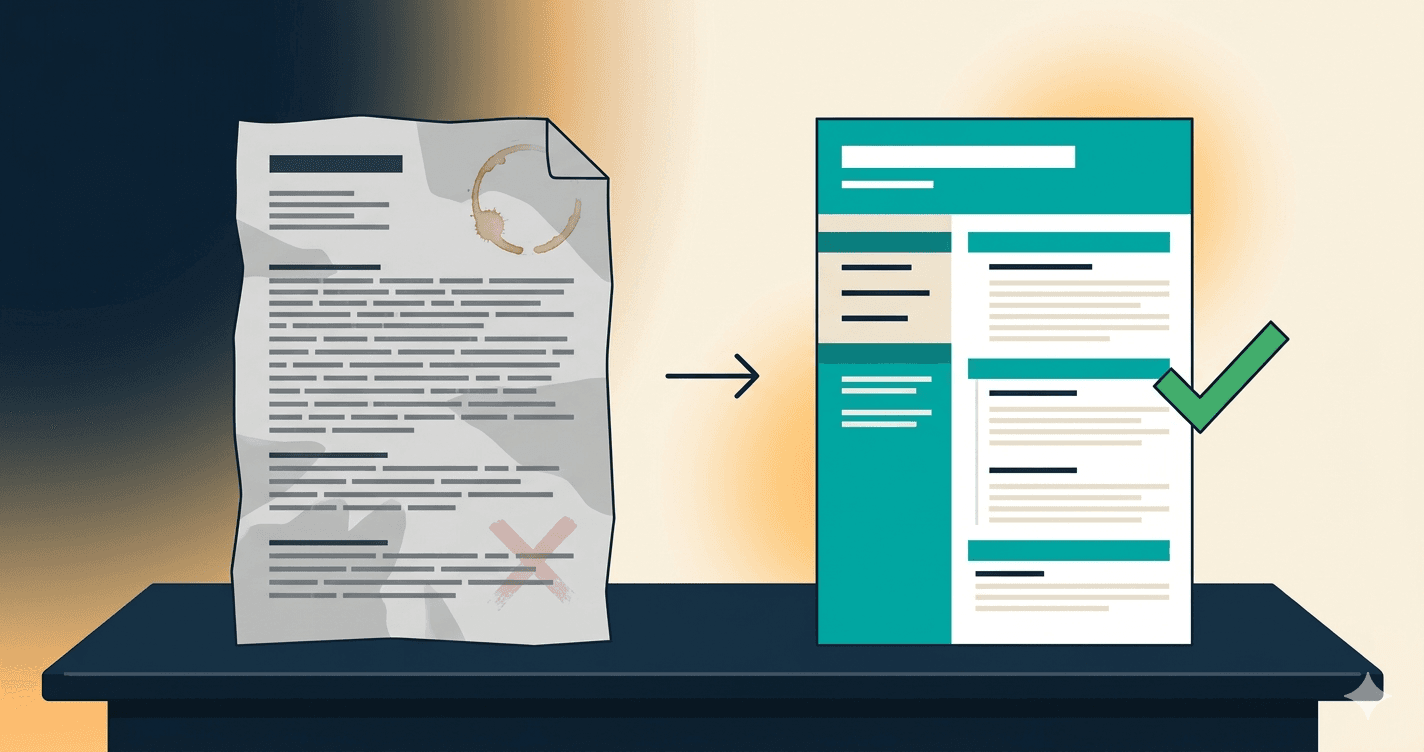
Figure out which role actually fits your clinical background, not which one sounds impressive. Then understand what your resume needs to say in corporate language. A nursing resume sent to a MedTech recruiter is invisible regardless of how qualified you are. We broke down exactly how to fix that here: How to Rewrite Your Nursing Resume for Corporate Jobs
Stop waiting until you feel ready. The nurses who made this jump didn't feel ready either. They just started.
Ten minutes. Your clinical background in, your best-fit corporate roles out, along with what the resume translation looks like for each one.
You've already done the hardest part of this transition. You admitted to yourself you're looking for the exit. The rest is figuring out where the door is.